



How to Choose the Right Playard for Your Baby and Home
6–7 minute read
October 6, 2026
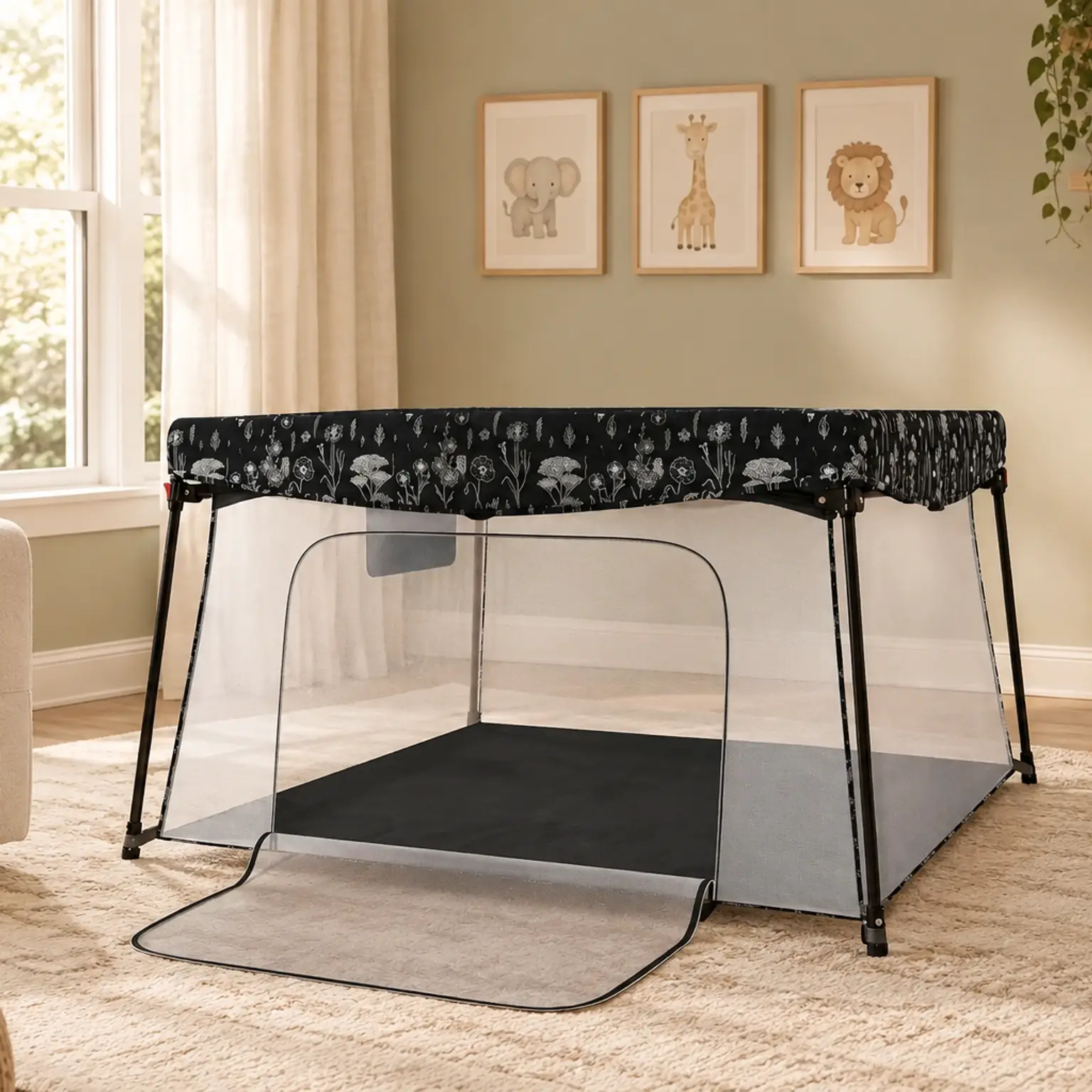
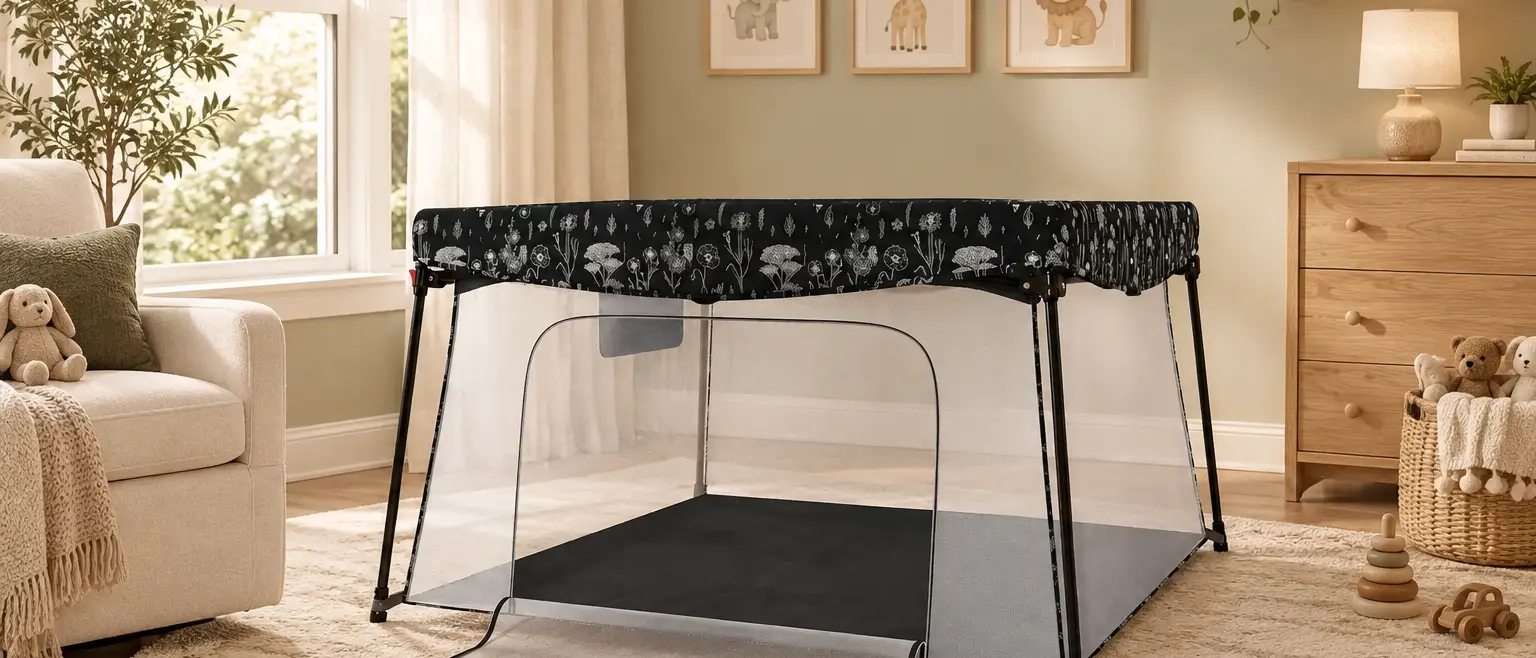
A playard can be one of those baby products you don't realize you need until you have one.
It can create a contained space for your baby to play, give you a convenient spot to keep the baby nearby while you're moving around the house, and make travel a little easier. Some playards also come with features designed to make everyday routines more convenient.
But not every playard works equally well for every family.
The right choice depends on where you plan to use it, how often you'll move it, how much space you have, what features you'll actually use, and how your baby will grow with it.
Here's what to consider before choosing one.
Do You Need a Playard? Why Parents Choose One
A playard (https://everandeverbaby.com/search?q=playard) isn't a nursery essential for every family, but it can be a useful addition to many homes.
For some parents, the biggest benefit is having a dedicated place for supervised play. Instead of creating a completely babyproofed play area in every room, a playard can provide a defined space where your baby can spend time while you're nearby.
Portability is another advantage. A playard can move from the nursery to the living room, fold away when you need the floor space, or travel with you when the design is intended for that purpose.
For smaller homes, that flexibility can be particularly useful. Rather than adding another permanent piece of furniture, you can choose a playard that serves a purpose when you need it and stores away when you don't.
The key is to think about your routine first and the product second.
What to Look for When Choosing a Playard
Once you know how you'll use a playard, the next step is comparing the features that actually matter to you.
Size & Space
Start with where the playard will live most of the time.
Measure the area where you expect to use it, but don't stop at the footprint. Think about the space you'll need to walk around it, open or fold it, and access your baby comfortably.
A larger playard may give your baby more room to move, but a compact design can make more sense in an apartment, bedroom, or smaller living area.
If you plan to move the playard between rooms, consider both its open and folded dimensions. A product that fits beautifully in your living room may be much less convenient if you have nowhere to store it when folded.
Portability & Storage
If portability is one of the reasons you're buying a playard, pay attention to how easily it folds and how much space it takes up when stored.
Look for features such as a compact fold, wheels where provided, and a travel bag if those features match your routine.
Think about how you'll actually move it. Will it stay on one floor? Travel in the car? Move between a bedroom and living room every day?
The best portable playard isn't necessarily the lightest one. It's the one you can realistically move, fold, and store without turning every use into a project.
Safety & Stability
Safety should come before convenience or appearance.
Look for sturdy construction, secure locking mechanisms, intact mesh or fabric, and hardware that is properly attached. The playard should be assembled exactly as instructed and should remain stable when set up.
CPSC's current play-yard requirements address structural integrity, locking mechanisms, side-height requirements, mesh and fabric components, and other potential hazards. Play yards are subject to mandatory federal safety requirements and the applicable ASTM standard incorporated by CPSC.
And don't forget to check the product after you've been using it. A playard can experience repeated folding, moving, and unfolding, so its condition can change over time.
Features That Fit Your Routine
Playards can come with very different feature sets.
Depending on the product, you might find a changing station, bassinet feature, storage organizer, canopy, wheels, travel bag, or other manufacturer-designed accessories.
More features aren't automatically better.
Think about the routines you actually want the playard to support. If you'll mostly use it as a portable play space, you may not need every available attachment. If you're using it around the house during the early months, a manufacturer-designed changing or bassinet feature may be useful.
The important part is using every feature only as directed by the manufacturer and removing or adjusting accessories when the instructions say to do so.
Which Playard Is Right for Your Lifestyle?
The best playard for a family with a large dedicated nursery may not be the best fit for someone living in a compact apartment.
If space is limited, prioritize a footprint and folded size that work comfortably within your home. A compact fold can be just as important as the open dimensions.
If travel is the priority, focus on portability, folding, weight, storage, and whether the product comes with a travel bag or other transport-friendly features.
If you want a playard for everyday home use, consider how easily it moves between rooms and whether the features support the routines you already have.
And if you're thinking about how the product will work as your baby grows, pay close attention to the manufacturer's age, weight, height, and developmental guidance rather than assuming the product will remain appropriate indefinitely.
Playard Safety: What Parents Should Check
A playard is only useful when it's set up and used correctly.
Before your baby uses it, follow the manufacturer's assembly instructions and make sure all locking mechanisms are fully engaged. Check the mesh, fabric, seams, frame, hardware, and floor for damage or anything that appears loose or incomplete.
CPSC's play-yard requirements specifically address issues including structural integrity, locking and latching mechanisms, side rails, mesh, and other components intended to prevent hazards during use.
If the playard includes a changing table, bassinet, or other attachment, make sure it is installed and used exactly as instructed. The American Academy of Pediatrics also advises parents to remove a raised changing table before using the playpen area when the product's instructions require it, and to check mesh for tears, holes, loose threads, or other damage.
And always check the product's recall status before using a secondhand playard or one that has been stored for a long time. CPSC maintains a searchable database of recalls and product safety warnings.
Can a Baby Sleep in a Playard?
This is where the specific product matters.
A playard can be an appropriate sleep space when the product is designed and approved for sleep and is used according to the manufacturer's instructions. CPSC's definition of a play yard includes products intended to provide sleeping and playing accommodation for children who cannot climb out and are under 35 inches tall.
The American Academy of Pediatrics recommends that babies sleep on a firm, flat, non-inclined surface in a crib, bassinet, portable crib, or play yard that meets applicable CPSC safety standards. The sleep space should have a properly fitted sheet and remain free of pillows, blankets, bumper pads, and other soft objects.
That doesn't mean every playard accessory or configuration is automatically suitable for sleep.
Always check the specific model's instructions to determine which configuration is intended for sleep and which features are meant only for supervised use.
Also avoid adding an aftermarket mattress or padding simply because it seems more comfortable. CPSC has issued recent recalls and warnings involving aftermarket play-yard mattresses that did not fit properly and created entrapment risks.
How to Check Your Playard Before Every Use
You don't need a complicated inspection every time. A quick visual and physical check can become part of your routine.
Before use, ask:
- Are all locks and latches fully engaged?
- Is the frame stable and properly opened?
- Is the mesh free from tears, holes, or loose threads?
- Are the seams and attachments intact?
- Are all required parts and hardware present?
- Are there any sharp edges, exposed hardware, or damaged components?
- Are you using the correct configuration for your baby's age, size, and developmental stage?
- Are any accessories attached exactly as instructed?
- Has the product been recalled?
The AAP recommends regular checks of mesh and other playpen components for damage, while CPSC provides recall information for products that may present safety hazards.
If something looks damaged or doesn't lock correctly, stop using the playard until you've determined whether it can be safely repaired or needs to be replaced.
Playard vs. Playpen: What's the Difference?
The terms playard and playpen are often used interchangeably, and parents may see either term used when shopping.
In general, both refer to an enclosed space designed to give a baby or young child a defined area for play. The important distinction isn't necessarily the name on the box—it's what the specific product is designed and approved to do.
A modern playard may include features for portability, play, and, depending on the product, sleep. A simpler playpen may primarily provide a contained play area.
Rather than relying on terminology alone, check the manufacturer's intended use, age and size limits, included features, and instructions.
That will tell you much more about whether a particular product fits your needs.
FAQs
What should I look for when buying a playard?
Consider the size, folded dimensions, portability, stability, locking mechanisms, materials, visibility, age and weight limits, and features that fit your routine. Most importantly, make sure the product meets applicable safety requirements and follow the manufacturer's instructions.
What age can a baby use a playard?
It depends on the specific playard. Manufacturers provide age, weight, height, and developmental limits for their products. CPSC defines play yards subject to its federal standard as intended for children who cannot climb out and are under 35 inches in height. Always follow the limits provided for your specific model.
Are playards safe for babies?
A playard that meets applicable safety standards and is correctly assembled and used according to its instructions can provide a safe enclosed space for babies. Regularly check for damage, missing parts, loose hardware, and recalls.
Can a baby sleep in a playard?
Yes, if the specific playard is designed and approved for sleep and is used according to its instructions. The AAP recommends a firm, flat, non-inclined sleep surface in a compliant play yard or other approved infant sleep product.
Are portable playards worth it?
They can be especially useful for families who want a contained space that can move between rooms or travel with them. Whether one is worthwhile depends on how often you'll use it and whether its folded size, weight, and features fit your routine.
What is the difference between a playard and a playpen?
The terms are often used interchangeably. Instead of focusing on the name, look at the product's intended use, safety requirements, included features, and manufacturer instructions.
How often should I check a playard for damage?
Check it when you first assemble it and make quick checks before regular use. Pay particular attention to locks, mesh, seams, hardware, and the frame. Also inspect it after moving, folding, storing, or adjusting it.
Wrapping Up
Choosing a playard is really about finding the right balance between your baby's needs and the way your home actually works.
Start with your space. Think about whether you'll move the playard, travel with it, or keep it in one room. Then look at safety, age and size limits, folding, storage, and the features you'll genuinely use.
Most importantly, don't assume that every playard or accessory can be used in the same way. Follow the manufacturer's instructions, check your product regularly, keep an eye on recalls, and make sure any sleep configuration is specifically intended for that purpose.
The right playard isn't necessarily the one with the most features.
It's the one that fits naturally into your family's everyday life.
Suggested For You

California Car Seat Laws: What LA Parents Need to Know in 2026
Driving with a baby or young child in Los Angeles comes with its own set of challenges, from packed freeways to frequent short trips across the city. California's child passenger safety laws spell out when children need rear-facing seats, car seats, boosters, and seat belts—but knowing the law is only part of keeping little passengers safe. Here's what LA parents need to know about California's current car seat requirements and how to make safer choices as their child grows
Read more
9 Car-Seat Checks Before Your First Fall Road Trip
Car-seat safety can feel straightforward until small details start adding up. A harness that's slightly too loose, a seat that's not installed as securely as it should be, or moving to the next stage too soon can all affect how well a car seat protects your child. This Child Passenger Safety Week, here's a practical look at five mistakes parents may not realize they're making—and what to check before your next drive
Read more
The First-Time Parent Classes in Boston That Are Actually Worth Your Saturday Morning
Boston has no shortage of classes for expecting parents, but not every Saturday workshop is worth giving up your weekend for. From childbirth preparation and newborn care to breastfeeding and infant CPR, here’s how to find the classes that offer genuinely useful skills and information for first-time parents.
Read more
Parents' Day 2026: The Baby Gear That Does the Heavy Lifting for Both of You
The best baby gear doesn't just support your baby, it supports both parents. This Parents Day 2026, discover practical products that encourage teamwork, simplify everyday routines, and help new families navigate parenthood together with greater confidence.
Read more
Hosting a 4th of July BBQ With a Baby in the House
Celebrating the 4th of July with a baby looks different—and that’s okay. From hosting a backyard BBQ around nap schedules to deciding whether fireworks are worth it, this parent-first guide shows you how to enjoy Independence Day while keeping your baby safe, calm, and comfortable.
Read more
Baby Milestones: 6 Month Milestones - What to Expect
Six months is a powerful turning point in your baby’s first year. From early mobility to new sounds, changing sleep, and the introduction of solid foods, 6-month milestones reveal how quickly your infant is growing. This guide breaks down what to expect, what’s normal, and how to support your baby through this exciting developmental stage.
Read more


