



California Car Seat Laws: What LA Parents Need to Know in 2026
6-7 minute read
September 26, 2026
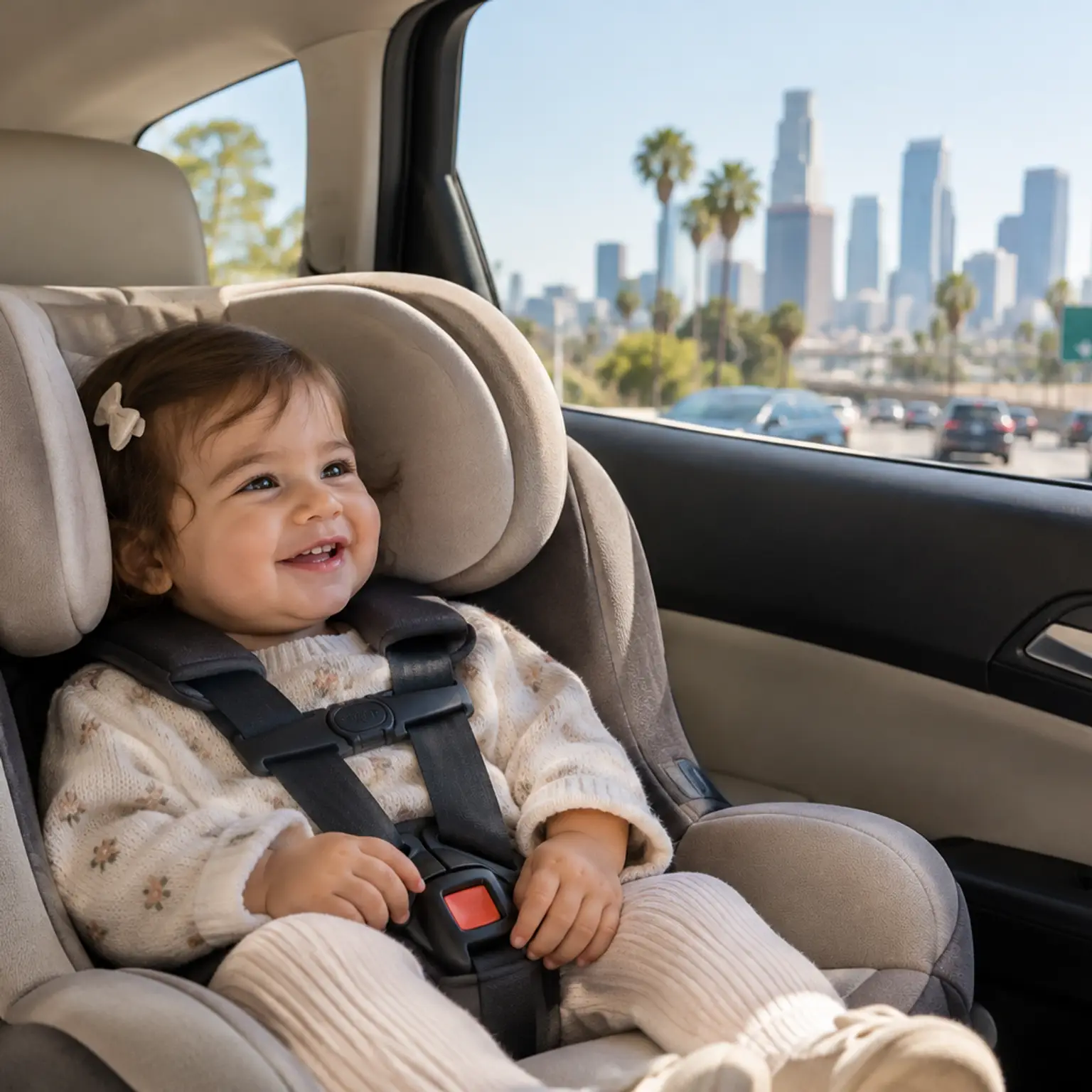
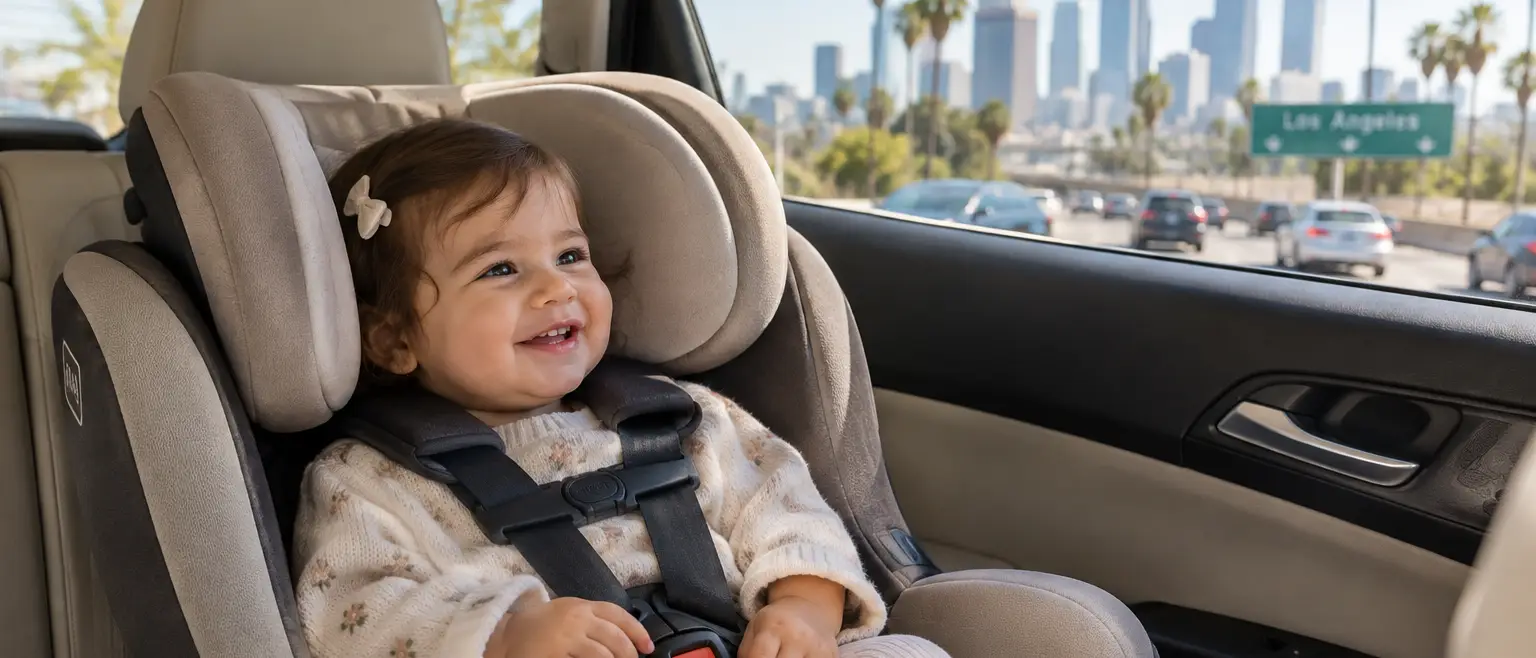
For LA parents, car rides are part of everyday life. There are daycare drop-offs, grocery runs, pediatrician appointments, weekend trips, and those inevitable journeys across the city that somehow take much longer than expected.
With so much time spent in the car, understanding California's child passenger safety laws is important. But there is one distinction worth making from the start: California law establishes minimum requirements, while child passenger safety organizations often recommend keeping children in each stage longer when they still fit the seat properly.
California's current requirements cover rear-facing restraints, child passenger restraints, boosters, seat belts, and where children can ride in a vehicle. Here's what LA parents should know in 2026—and what to consider beyond the legal minimum.
What California's Car Seat Laws Actually Require
California law requires children to be properly restrained according to their age, height, weight, and the requirements of their child restraint system.
Children under 2 years old must generally ride in a rear-facing car seat, unless they weigh at least 40 pounds or are at least 40 inches tall. The restraint must also be used according to the height and weight limits specified by the manufacturer.
For children who are older, California requires them to remain in an appropriate child passenger restraint until they reach 8 years old or 4 feet 9 inches in height. At that point, they may use a properly secured seat belt.
That doesn't necessarily mean a child should move to the next stage as soon as they reach one of these milestones. The child's size, the limits of the specific car seat, and the way the vehicle's seat belt fits all matter.
Think of the law as the starting point—not the entire car seat safety checklist.
When Does Your Child Need to Be Rear-Facing?
California requires children under 2 to ride rear-facing, with the state's 40-pound or 40-inch exceptions.
But parents don't necessarily need to turn a child forward-facing immediately after their second birthday.
The American Academy of Pediatrics recommends keeping infants and toddlers rear-facing for as long as possible, until they reach the highest height or weight allowed by the car seat manufacturer. Many convertible seats allow children to remain rear-facing beyond age 2. NHTSA provides similar guidance.
This is one reason convertible car seats can be useful for growing children. Once a child outgrows a rear-facing-only infant seat, a convertible or all-in-one seat can allow them to continue riding rear-facing.
And if your toddler's legs touch the vehicle seat while they're rear-facing, that alone isn't a reason to turn the seat around. The AAP notes that children can remain rear-facing while their legs reach the vehicle seat back, provided they remain within the manufacturer's limits.
When Should You Move From a Harnessed Seat to a Booster?
California law (https://www.chp.ca.gov/programs-services/programs/child-safety-seats/) doesn't set one specific age when every child should move from a forward-facing harnessed seat to a booster.
Instead, parents should follow the limits of their child's particular seat. CHP recommends keeping children in an appropriate harnessed restraint until they have outgrown the seat's height or weight limits.
NHTSA and the AAP similarly recommend keeping children in a forward-facing seat with a harness and tether for as long as possible, up to the manufacturer's maximum height or weight limits.
When a child has outgrown the forward-facing harnessed seat, a belt-positioning booster can help position the vehicle's lap-and-shoulder belt correctly across the child's body.
Before making the switch, check your car seat manual for signs that your child has outgrown the harness, including the seat's stated height and weight limits and the manufacturer's harness-position requirements.
When Can Your Child Stop Using a Car Seat or Booster?
California law allows a child to use a regular seat belt once they are 8 years old or 4 feet 9 inches tall.
But there's another question parents should ask: Does the seat belt actually fit?
CHP recommends the 5-Step Test:
- Does your child sit all the way back against the vehicle seat?
- Do their knees bend comfortably at the edge of the seat?
- Does the shoulder belt cross the shoulder and chest rather than the neck?
- Does the lap belt sit low across the thighs rather than across the stomach?
- Can your child maintain this position for the entire ride?
If the answer is no, CHP recommends continuing to use a booster until the seat belt fits properly.
The AAP notes that most children don't fit an adult seat belt properly without a booster until roughly 10–12 years old, although every child is different.
Can Your Child Ride in the Front Seat in California?
California generally requires children 8 years old or younger to ride in the rear seat, with specific exceptions. These can include situations where the vehicle has no rear seat, the rear seats cannot accommodate the restraint properly, all rear seats are occupied by younger children, or a medical reason requires the child to ride in front.
Even when an exception applies, the back seat is generally the safer place for children. NHTSA and the AAP recommend that children under 13 ride in the back seat.
There is one rule parents should never overlook: a rear-facing car seat must not be placed in front of an active passenger airbag. An inflating airbag can cause severe injury to a child in a rear-facing seat.
If you have a vehicle without a conventional back seat, check the vehicle manual and car seat instructions carefully before transporting a child.
What LA Parents Should Know About Car Seat Installation
Even the right car seat won't provide the intended protection if it isn't installed or used correctly.
Start by reading both the car seat manual and your vehicle owner's manual. Installation methods and requirements can vary between seats and vehicles.
When installing a car seat (https://www.healthychildren.org/English/safety-prevention/on-the-go/Pages/Car-Safety-Seats-Information-for-Families.aspx), check that:
- The seat is installed tightly according to the manufacturer's instructions.
- The correct seat belt or lower-anchor path is being used.
- A forward-facing seat uses its top tether when required by the seat and vehicle instructions.
- The harness is snug against your child.
- The chest clip sits at the appropriate position.
- A rear-facing seat is positioned at the correct recline angle.
- The seat remains within the manufacturer's height and weight limits.
If you're unsure about the installation, a certified Child Passenger Safety Technician can help you check both the installation and the fit of your child in the seat. The AAP recommends professional installation assistance for families who need it.
Where Can LA Parents Get a Car Seat Checked?
Parents can contact their local California Highway Patrol office to ask about child passenger safety assistance. CHP also directs families toward nationally certified Child Passenger Safety Technicians and fitting stations. Availability and appointment requirements can vary by location, so it's best to check before visiting.
Choosing the Right Car Seat for Your Family
Once you understand California's requirements, choosing the right type of seat becomes the next step.
Infant car seats are designed for babies and are typically rear-facing only. Many include a detachable carrier and separate base, which can be convenient for families moving a baby between the car and stroller.
Convertible car seats can be used rear-facing and later converted to forward-facing. Many have higher rear-facing limits than infant-only seats, allowing children to stay rear-facing longer.
All-in-one car seats can offer rear-facing, forward-facing, and booster modes in one seat. They can be useful for families looking for a longer-term option, although parents should make sure the seat fits properly in their particular vehicle.
Booster seats are intended for children who have outgrown their forward-facing harnessed seat but still need help positioning the vehicle's lap-and-shoulder belt correctly.
For LA families, practical considerations can matter too. Think about the size of your vehicle, whether multiple car seats need to fit across the back seat, whether grandparents or caregivers regularly drive your child, and whether the seat will need to move between vehicles.
FAQs
What are the car seat laws in California in 2026?
Children under 2 generally must ride rear-facing unless they weigh at least 40 pounds or are at least 40 inches tall. Children must remain in an appropriate child passenger restraint until they are 8 years old or 4 feet 9 inches tall, after which they may use a properly fitted seat belt.
How long does a child have to be rear-facing in California?
California law requires children under 2 to ride rear-facing, subject to the statutory exceptions. Safety organizations such as the AAP and NHTSA recommend keeping children rear-facing until they reach the maximum height or weight allowed by their particular seat.
When can a child use a booster seat in California?
There isn't one specific age in California law for moving from a forward-facing harness to a booster. The transition generally happens after a child has outgrown the height or weight limits of their forward-facing harnessed seat.
When can a child stop using a car seat in California?
California law allows a child to use a regular seat belt once they are 8 years old or 4 feet 9 inches tall. Parents should also check whether the vehicle's seat belt fits properly before removing the booster.
Does a child have to sit in the back seat in California?
Children 8 years old or younger generally must ride in the back seat, with certain legal exceptions. Regardless of those exceptions, the AAP and NHTSA recommend that children younger than 13 ride in the back seat.
Can a child ride in the front seat in California?
There are specific exceptions under California law that may allow a child to ride in the front seat. However, a rear-facing car seat must never be placed in front of an active passenger airbag.
How do I know if my child's seat belt fits properly?
Use the 5-Step Test. The child should sit against the seat back, have knees that bend comfortably at the edge, have the shoulder belt across the shoulder and chest, have the lap belt low across the thighs, and be able to maintain that position for the entire trip.
Where can I get a car seat checked in Los Angeles?
You can contact your local CHP Area Office about child passenger safety assistance or look for a nationally certified Child Passenger Safety Technician or fitting station. CHP recommends contacting the office in advance about appointments and availability.
Wrapping Up
California's car seat laws give LA parents a clear starting point, but choosing the safest restraint for your child involves more than checking an age or height requirement.
As your child grows, keep checking three things: California's requirements, your car seat's manufacturer limits, and the fit of the restraint on your child. A birthday doesn't automatically mean it's time to turn a seat forward-facing, switch to a booster, or move to a seat belt.
Whether you're making a quick daycare run or sitting in LA traffic for an hour, taking a few extra minutes to check the seat, harness, and installation can help make every trip a safer one.
Suggested For You
9 Car-Seat Checks Before Your First Fall Road Trip
Car-seat safety can feel straightforward until small details start adding up. A harness that's slightly too loose, a seat that's not installed as securely as it should be, or moving to the next stage too soon can all affect how well a car seat protects your child. This Child Passenger Safety Week, here's a practical look at five mistakes parents may not realize they're making—and what to check before your next drive
Read more
The First-Time Parent Classes in Boston That Are Actually Worth Your Saturday Morning
Boston has no shortage of classes for expecting parents, but not every Saturday workshop is worth giving up your weekend for. From childbirth preparation and newborn care to breastfeeding and infant CPR, here’s how to find the classes that offer genuinely useful skills and information for first-time parents.
Read more
Parents' Day 2026: The Baby Gear That Does the Heavy Lifting for Both of You
The best baby gear doesn't just support your baby, it supports both parents. This Parents Day 2026, discover practical products that encourage teamwork, simplify everyday routines, and help new families navigate parenthood together with greater confidence.
Read more
Hosting a 4th of July BBQ With a Baby in the House
Celebrating the 4th of July with a baby looks different—and that’s okay. From hosting a backyard BBQ around nap schedules to deciding whether fireworks are worth it, this parent-first guide shows you how to enjoy Independence Day while keeping your baby safe, calm, and comfortable.
Read more
Baby Milestones: 6 Month Milestones - What to Expect
Six months is a powerful turning point in your baby’s first year. From early mobility to new sounds, changing sleep, and the introduction of solid foods, 6-month milestones reveal how quickly your infant is growing. This guide breaks down what to expect, what’s normal, and how to support your baby through this exciting developmental stage.
Read more
10 Things No One Tells a New Dad (But Should)
Becoming a new dad is life-altering in ways no book, class, or well-meaning advice fully prepares you for. Between the joy, fear, pride, and exhaustion, new fatherhood often unfolds quietly—and confusingly. This guide shares the truths most people never tell new dads, so you can step into fatherhood with clarity, confidence, and compassion for yourself.
Read more


