



9 Car-Seat Checks Before Your First Fall Road Trip
5–6 minute read
September 17, 2026
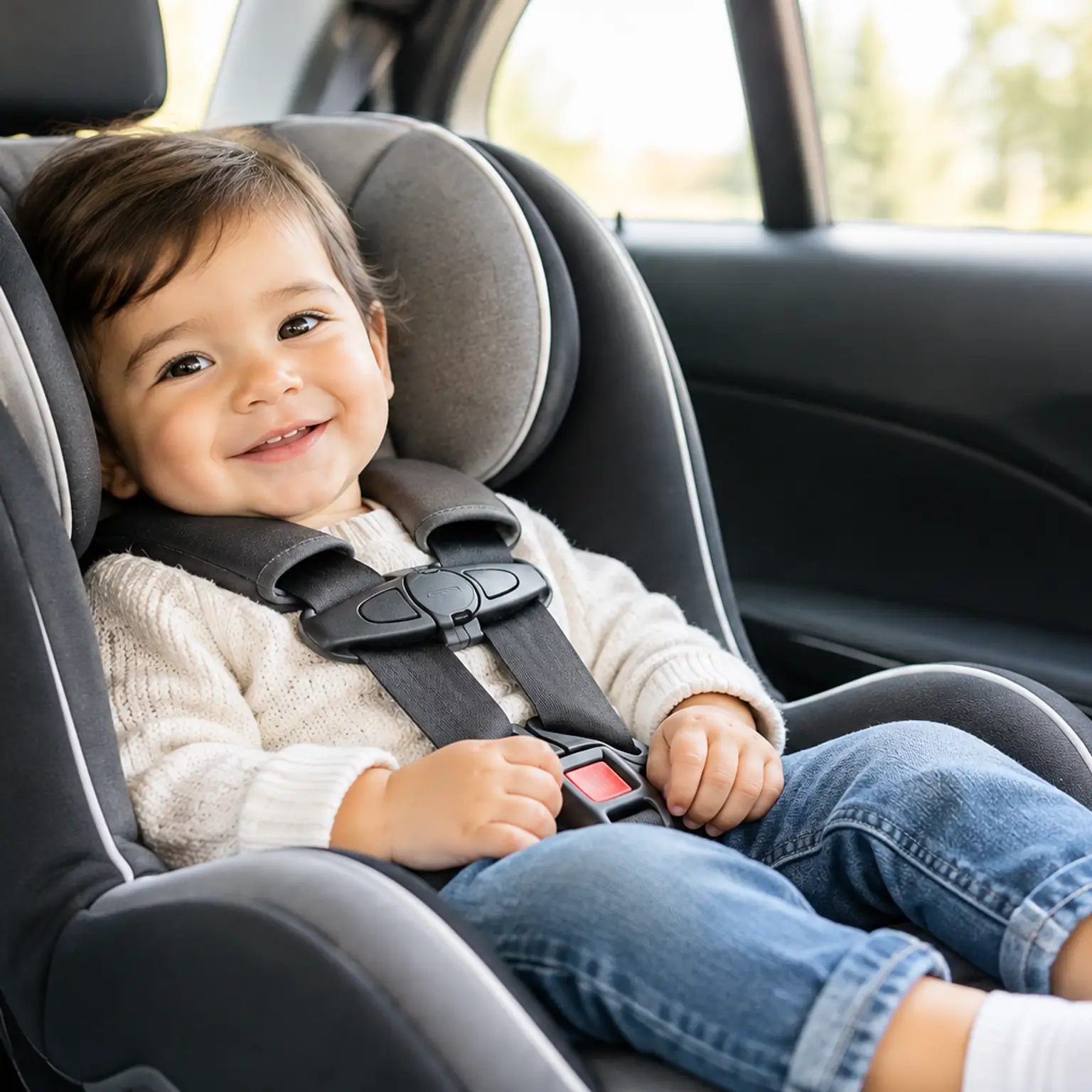

Fall road trips have a certain magic to them: cooler weather, changing leaves, a packed snack bag, and somewhere new to explore as a family. But before you load up the car, there’s one piece of travel gear that deserves a little extra attention: your child’s car seat.
A car seat (https://www.nhtsa.gov/car-seats-and-booster-seats/car-seat-installation-tips) that was installed correctly months ago may need a second look as your child grows, especially when changing from summer clothes to thicker fall layers. Your child may have moved closer to a seat’s height or weight limits, the harness may need adjusting, or you may simply have forgotten when you last checked the installation.
Before your next long drive, run through these nine simple car-seat safety checks.
Why Your Car Seat Deserves a Pre-Trip Check
Car-seat safety isn't something you need to completely rethink every time you get in the car. But a quick review before a long trip can catch small changes that matter.
Children grow quickly, and the way a car seat fits a six-month-old can look very different a few months later. Seasonal clothing can also change how snugly a harness fits. NHTSA recommends using a car seat according to the manufacturer's height and weight limits and keeping children in the appropriate restraint for as long as they remain within those limits.
Think of your pre-road-trip check as a reset: right seat, right installation, right fit, every time.
Check #1: Is Your Child Still in the Right Seat for Their Size?
Start with the basics: check your child's current height and weight against the limits listed by the car-seat manufacturer.
Don't move your child to the next stage simply because they've reached a certain age. NHTSA recommends keeping children rear-facing until they reach the manufacturer's maximum height or weight for the rear-facing position. After that, they can move to a forward-facing seat with a harness and tether, within the seat's limits.
For older children, a booster becomes appropriate after they outgrow a forward-facing harnessed seat. The goal is not to move through the stages as quickly as possible, but to use each restraint for as long as your child fits its requirements.
If you're unsure which type of seat is appropriate, NHTSA's Car Seat Finder (https://www.nhtsa.gov/campaign/right-seat) can help you compare options based on your child's age, height, and weight.
Check #2: Is the Car Seat Installed Correctly?
If you can't remember the last time you read the installation instructions, now is a good time.
Your car-seat manual and vehicle owner's manual should be your starting points because installation methods vary by seat and vehicle. Depending on the setup, a car seat may be installed using the vehicle seat belt or the lower anchors. Follow your specific manufacturer's instructions rather than assuming the same method works for every seat.
Also check that:
- The seat is installed in the correct seating position.
- The correct belt path or lower-anchor path is being used.
- Straps and belts aren't twisted.
- A rear-facing seat is at the manufacturer's recommended recline angle.
- The installation follows both the car-seat and vehicle manuals.
A familiar installation isn't necessarily a correct installation, so don't hesitate to start from the instructions again.
Check #3: Does the Seat Move More Than It Should?
Once the seat is installed, give it a firm check at the belt path.
NHTSA says a properly secured car seat should not move more than 1 inch side-to-side or front-to-back when pulled at the belt path.
If there's noticeably more movement, don't simply tighten everything you can reach. Recheck the installation instructions and make sure you're using the correct installation method for your specific seat and vehicle.
This is also a good reason to avoid assuming that "tight enough" looks the same for every car seat.
Check #4: Is the Harness Still Fitting Your Child Properly?
Your child's harness needs to fit snugly against their body—not just look secure.
For a rear-facing child, harness straps should sit at or below the shoulders. For a forward-facing child, they should be at or above the shoulders, following the specific instructions for your seat. The straps should lie flat without twists, and the chest clip should sit at armpit level.
After buckling your child in, tighten the harness until you can't pinch extra webbing at the shoulder.
If you've noticed that you have to keep pulling the straps tighter—or that they suddenly seem too loose—it's worth checking the harness height and overall fit before leaving for your trip.
Check #5: Are Fall Layers Getting in the Way of a Safe Harness Fit?
That cozy puffer jacket may be perfect for a chilly morning walk, but bulky outerwear can interfere with a properly fitted car-seat harness.
The safest approach is to buckle your child into the harness first, with bulky coats removed, and then add warmth over the secured harness. NHTSA specifically warns that bulky clothing and heavy coats can prevent the harness from fitting snugly.
For a fall road trip, think layers rather than bulk. A thinner fleece or warm base layer can make it easier to secure the harness properly. Once your child is buckled, you can place a coat or blanket over the harness for warmth, following the car-seat manufacturer's guidance.
Check #6: Is the Car Seat Still Within Its Height, Weight, and Expiration Limits?
Children aren't the only thing that changes over time—the car seat has limits, too.
Check the label and manual for:
- Maximum rear-facing height and weight
- Maximum forward-facing height and weight
- Harness or booster requirements
- Lower-anchor weight limits
- Expiration information
- Any manufacturer-specific replacement guidance
Don't guess based on how the seat looks. The manufacturer's instructions are the source for the specific limits of your model.
It's also worth checking whether your child has recently crossed a milestone that requires an adjustment, such as moving the harness to a different position.
Check #7: Have You Checked for Recalls or Missing Parts?
Before a major road trip, take a minute to confirm that your car seat hasn't been affected by a safety recall.
NHTSA's recall database allows parents to search for car-seat recalls and other safety information. Registering your car seat with the manufacturer can also help you receive recall and safety notices.
While you're checking, look over the entire seat for anything that seems missing, damaged, cracked, loose, or different from how it should look.
Pay particular attention if the seat has been moved between vehicles, stored for a period of time, or used by another child. If a required component is missing, don't improvise with a replacement part unless it's approved by the manufacturer.
Check #8: Is Your Forward-Facing Seat Using the Tether Correctly?
If your child rides in a forward-facing car seat, don't overlook the top tether.
The tether attaches the car seat to a designated tether anchor in the vehicle and helps limit forward movement during a crash. NHTSA recommends using the tether with a forward-facing car seat when permitted by both the car-seat and vehicle manufacturers.
The important part is knowing which anchor is actually the tether anchor. Some vehicle hardware can look similar, so check your vehicle owner's manual rather than guessing.
If you're using lower anchors, remember that they also have manufacturer-specified weight limits. Once your child exceeds the applicable lower-anchor limit, the car seat may need to be installed with the vehicle's seat belt instead.
Check #9: When Was the Last Time You Had the Installation Checked?
Even if you've installed the seat yourself several times, an inspection can be a worthwhile final step before a long trip.
Certified Child Passenger Safety Technicians can check the installation and show you how to use the seat correctly. NHTSA notes that many inspection stations offer these services free of charge, and some locations offer virtual appointments.
This can be particularly helpful if you've:
- Installed a new car seat
- Switched vehicles
- Changed from rear-facing to forward-facing
- Moved from lower anchors to a seat-belt installation
- Adjusted the harness for a growing child
- Had trouble getting a secure installation
If something doesn't feel right, getting another set of trained eyes is better than hoping you've done it correctly.
What Else to Check Before a Long Drive With Your Baby
Once the car seat is sorted, take a few minutes to think about everything else your child will need during the drive.
A well-packed (https://everandeverbaby.com/collections/gear-travel?srsltid=AfmBOorXfwLa0hht5z6eaKXuo8GtyfLoJuEt2N2CFnjhOKQb2F79JP-5) road-trip setup might include:
- A diaper bag stocked with more changes than you think you'll need
- Easy-to-reach snacks and bottles, when age-appropriate
- Extra clothes for spills and messes
- Wipes and changing essentials
- A stroller or travel-friendly gear for stops
- Small comfort items for breaks
- A portable changing solution for longer stretches between stops
Keep frequently needed items accessible without placing loose objects where they could become hazards during a crash. And remember that the safest road-trip routine includes regular stops so you can take care of feeding, diapering, stretching, and other needs outside the moving vehicle.
Making Car-Seat Safety Part of Every Road Trip Routine
You don't need a complicated checklist every time you drive to the grocery store. But before a long fall road trip, a five-minute car-seat reset can give you valuable peace of mind.
Check the seat. Check the installation. Check the harness. Check the clothing. Check the limits. Check for recalls. And if you're unsure about anything, get help before you pull out of the driveway.
The best car-seat routine is the one that becomes second nature: every child, every ride, every time.
Frequently Asked Questions
How do I know if my child's car seat is installed correctly?
Start with your car-seat manual and your vehicle owner's manual. The seat should be installed according to the manufacturer's instructions and should not move more than 1 inch side-to-side or front-to-back when tested at the belt path. If you're unsure, have the installation checked by a certified Child Passenger Safety Technician.
How tight should a car seat harness be?
The harness should be snug enough that you cannot pinch extra material at the child's shoulder. The straps should lie flat without twists, and the chest clip should be positioned at armpit level.
Can my baby wear a coat in their car seat?
Avoid bulky coats underneath the harness because they can interfere with a snug fit. Buckle your child securely first, then use a blanket or appropriate outer layer over the harness for warmth.
How often should I check my child's car seat installation?
There isn't a single universal interval that replaces checking the seat whenever something changes. Recheck the installation when you switch vehicles, adjust the seat's configuration, your child grows, or you notice movement or another issue. A professional inspection can also be useful when you're unsure.
How do I know when my child needs a different car seat?
Check your current seat's height and weight limits and follow the manufacturer's instructions. Children should remain rear-facing until they reach the seat's maximum rear-facing height or weight, then use an appropriate forward-facing seat with a harness and tether before transitioning to a booster when they outgrow those limits.
How can I check whether my car seat has been recalled?
Search NHTSA's recall database and check your car-seat manufacturer's safety notices. Registering your car seat with the manufacturer can also help you receive future recall notifications.
Should I use the LATCH system or a seat belt to install a car seat?
Use the installation method permitted by your specific car-seat and vehicle manufacturers. Depending on the seat and vehicle, installation may use lower anchors or the vehicle seat belt. Don't assume you should use both unless the instructions specifically allow it.
Wrapping Up
Car-seat safety doesn't have to feel complicated.
Most parents aren't intentionally making unsafe choices. They're adjusting to a growing child, a changing season, a different vehicle, or simply a busy day.
That's why small, regular checks matter.
Take another look at the seat. Check the installation. Tighten the harness. Remove bulky layers. Review the manufacturer's limits. And when you're unsure, ask a certified professional for help.
This Child Passenger Safety Week, don't aim to memorize every car-seat rule. Just make sure the seat you're using today is still the right fit for your child today.
Suggested For You

The First-Time Parent Classes in Boston That Are Actually Worth Your Saturday Morning
Boston has no shortage of classes for expecting parents, but not every Saturday workshop is worth giving up your weekend for. From childbirth preparation and newborn care to breastfeeding and infant CPR, here’s how to find the classes that offer genuinely useful skills and information for first-time parents.
Read more
Parents' Day 2026: The Baby Gear That Does the Heavy Lifting for Both of You
The best baby gear doesn't just support your baby, it supports both parents. This Parents Day 2026, discover practical products that encourage teamwork, simplify everyday routines, and help new families navigate parenthood together with greater confidence.
Read more
Hosting a 4th of July BBQ With a Baby in the House
Celebrating the 4th of July with a baby looks different—and that’s okay. From hosting a backyard BBQ around nap schedules to deciding whether fireworks are worth it, this parent-first guide shows you how to enjoy Independence Day while keeping your baby safe, calm, and comfortable.
Read more
Baby Milestones: 6 Month Milestones - What to Expect
Six months is a powerful turning point in your baby’s first year. From early mobility to new sounds, changing sleep, and the introduction of solid foods, 6-month milestones reveal how quickly your infant is growing. This guide breaks down what to expect, what’s normal, and how to support your baby through this exciting developmental stage.
Read more
10 Things No One Tells a New Dad (But Should)
Becoming a new dad is life-altering in ways no book, class, or well-meaning advice fully prepares you for. Between the joy, fear, pride, and exhaustion, new fatherhood often unfolds quietly—and confusingly. This guide shares the truths most people never tell new dads, so you can step into fatherhood with clarity, confidence, and compassion for yourself.
Read more
Does Daylight Savings Cause Sleep Regression? Here’s the Truth
When the clocks change, baby sleep often feels like it falls apart overnight. But is daylight savings actually causing a sleep regression—or just disrupting your baby’s internal clock? Here’s what science (and pediatric sleep experts) say parents should know in 2026.
Read more


