


Changing Table vs. Changing Dresser: Which One Is Actually Worth Buying?
5 minute read
November 5, 2026
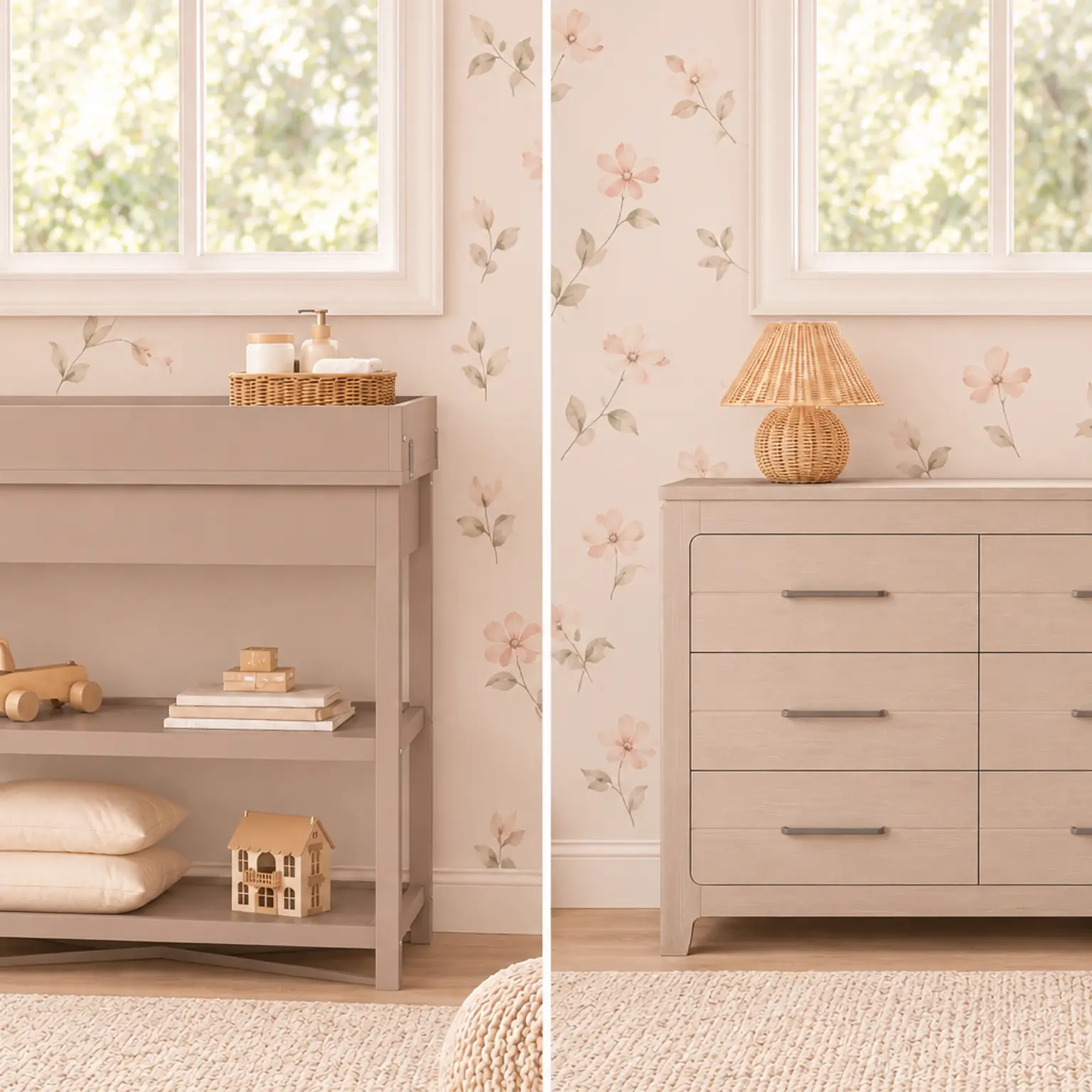
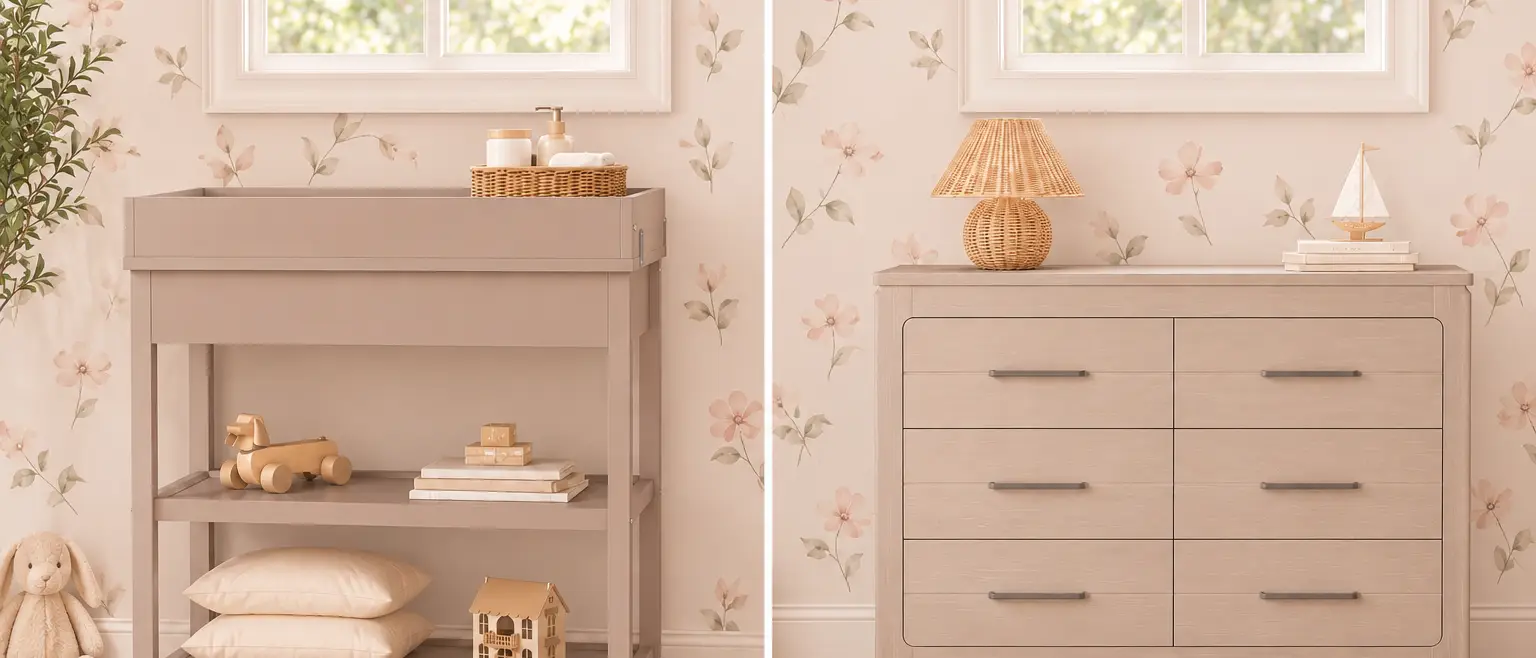
Diaper changes will be one of the most frequent parts of your day for a long time. Early on, you might change your baby around the clock, and even as things slow down, the changing station will stay one of the busiest spots in the nursery.
That’s why it’s worth choosing your changing setup carefully. The two most popular options, a dedicated changing table and a dresser with a changing topper, each have their own strengths.
Here’s how they compare, so you can choose the one that fits your nursery and your family best.
What’s the Difference Between a Changing Table and a Changing Dresser?
A changing table (https://everandeverbaby.com/search?q=changing%20table) is a piece of furniture designed specifically for diaper changes. It usually has a raised changing surface with guardrails on top and open shelves or a few small drawers below for diapers, wipes, and supplies.
A changing dresse (https://everandeverbaby.com/search?q=changing%20dresser)r is a regular nursery dresser used as a changing station, typically with a changing topper or tray attached on top to hold a contoured changing pad. Once the diaper years are over, the topper comes off and the dresser keeps working as everyday storage.
Both give you a dedicated, comfortable place to change your baby. The main differences come down to space, storage, and how long you’ll use the piece.
The Case for a Changing Table
- Compact footprint: Changing tables are often narrower and lighter than dressers, making them a great fit for small nurseries, shared rooms, or apartments.
- Open, easy-access storage: Open shelves let you grab diapers, wipes, and spare clothes quickly, often with one hand while the other stays on your baby.
- Designed for diaper changes: Changing tables are built at a comfortable working height for changes, with a raised surface and guardrails made for the job. That can be easier on your back during frequent changes.
- Budget-friendly options: A simple changing table can be a cost-effective choice if you already have storage elsewhere.
The trade-off is that a changing table has a shorter lifespan, since it’s designed primarily for the diaper years. Some models convert into a bookshelf or storage unit, which can help extend their use.
The Case for a Changing Dresser
- More storage: Dressers offer deep drawers for clothes, sleep sacks, blankets, and supplies, often holding much more than a changing table.
- Long-term value: Once your child is out of diapers, simply remove the changing topper and the dresser keeps working in the nursery, a big-kid room, or anywhere else in your home. For many families, that makes it a better long-term investment.
- Two pieces in one: A changing dresser can replace both a changing table and a separate dresser, which can save floor space and money overall.
- Coordinated look: Many dressers are designed to match cribs and other nursery pieces, making it easy to create a cohesive room.
The trade-off is that dressers take up more floor space and usually cost more upfront than a basic changing table.
Side-by-Side Comparison
Changing Table
Changing Dresser
Space
Compact, great for small rooms
Larger footprint
Storage
Open shelves, limited capacity
Deep drawers, lots of capacity
Cost
Often lower upfront
Often higher upfront, but replaces two pieces
Longevity
Mainly for the diaper years (unless convertible)
Keeps working for years after
Best for
Small spaces, tighter budgets, extra storage elsewhere
Long-term value, more storage, coordinated nursery sets
Safety Tips for Any Changing Station
Whichever you choose, the safety basics stay the same:
- Anchor it to the wall. CPSC’s Anchor It! campaign warns that dressers and other furniture can tip over onto young children. Anchor changing tables and dressers to the wall with anti-tip kits, even before your baby is mobile.
- Use a contoured changing pad with a safety strap. Choose a pad that fits your changing surface properly and stays securely in place. On a dresser, use a changing topper or tray so the pad can’t slide off.
- Keep one hand on your baby. The AAP advises never leaving your baby unattended on a changing table, even for a moment. Safety straps help, but they’re not a substitute for keeping a hand on your baby at all times.
- Keep supplies within reach, and out of baby’s. Organize diapers, wipes, and cream so you can grab them without stepping away, but keep creams, lotions, and small items out of your baby’s reach.
- Choose products that meet current safety standards. CPSC (https://www.cpsc.gov/Business--Manufacturing/Business-Education/Business-Guidance/Baby-Changing-Products)has federal safety standards for changing tables, so look for products that meet them and follow the manufacturer’s assembly and use instructions.
Which One Should You Choose?
A changing table may be right for you if:
- Your nursery is small or shared
- You already have a dresser or plenty of storage elsewhere
- You’re looking for a lower upfront cost
- You love quick, open-shelf access to supplies
A changing dresser may be right for you if:
- You want furniture that lasts well beyond the baby years
- You need plenty of storage for clothes and supplies
- You’d like one piece that does the job of two
- You’re building a coordinated nursery set
If you’re still weighing your options, check out Nursery Bundle or Buy It Piece by Piece? on the Ever & Ever Blog for tips on getting the most from your nursery budget. You can also browse the Ever & Ever Nursery Collection for coordinating sets.
FAQs
Is a changing dresser better than a changing table? It depends on your needs. A changing dresser offers more storage and long-term use, while a changing table is more compact and often more affordable upfront. Many families find a changing dresser to be the better long-term value.
Can I use a regular dresser as a changing table? Yes, many parents do. Choose a sturdy dresser at a comfortable height, anchor it to the wall, and use a changing topper or tray that holds a contoured changing pad securely in place.
Do I need a changing topper on a dresser? A changing topper is strongly recommended. It keeps the changing pad from sliding and adds raised edges around the changing area. Always follow the manufacturer’s instructions for attaching it.
How long will I use a changing table? Most families use a changing station until their child is out of diapers, often around 2 to 3 years. Some changing tables convert into shelving or storage, extending their use.
Do changing tables need to be anchored to the wall? Yes. CPSC recommends anchoring furniture like changing tables, dressers, and bookcases to the wall to help prevent dangerous tip-overs.
Wrapping Up
There’s no wrong choice between a changing table and a changing dresser, just the right one for your space and plans.
If you’re short on room or budget, a changing table can be a practical, efficient solution. If you want more storage and a piece that will stay with your family for years, a changing dresser is hard to beat.
Whichever you choose, set it up safely, keep your essentials within reach, and make it a space that makes those thousands of diaper changes just a little easier.
Suggested For You

Convertible Crib vs. Mini Crib: Which Is Right for Your Space?
Choosing a crib is about more than nursery style. A convertible crib can offer long-term versatility, while a mini crib can be a practical solution for smaller spaces. Here's how to compare the two and decide which fits your nursery, home, and growing family.
Read more
The Chicago Baby Shower Guide Nobody Had When We Were Planning Ours
Planning a baby shower in Chicago comes with plenty of possibilities, from intimate gatherings at home to stylish celebrations at neighborhood venues. Whether you're planning for a first-time parent or keeping things simple for a growing family, here's a guide to the Chicago-specific details that can make planning easier, more personal, and a lot less stressful.
Read more
The Most Overrated (and Underrated) Items on Every Baby Registry
Every parent wants a baby registry that covers the essentials without filling the nursery with products that barely get used. Yet with endless "must-have" lists online, it's easy to overspend on trendy gadgets while overlooking items you'll rely on every single day. Before you click "Add to Registry," here's how to separate the baby gear you'll truly use from the products you may be better off skipping.
Read more
The Subway Stroller Checklist: 6 Features That Matter More Than You'd Think
City parenting comes with its own set of challenges—stairs, crowded platforms, narrow sidewalks, elevators that aren't always working, and public transportation. Whether you're riding the subway every day or simply exploring a busy downtown, the right stroller can make every outing smoother. Here's a practical checklist of six stroller features that matter far more than most parents realize.
Read more
5 Nursery Color Palettes That Aren't White or Beige
White and beige nurseries have dominated Pinterest for years—but they're no longer the only option. In 2026, parents are embracing richer earth tones, muted greens, warm woods, and soft blues that create calming, timeless spaces without sacrificing personality. Here are five nursery color palettes that feel fresh, modern, and designed to grow with your child.
Read more
First Mother’s Day? Here’s How to Make It Truly Memorable
A first Mother’s Day is different from any other. It’s quieter, more emotional, and deeply meaningful. Whether you’re celebrating yourself or honoring a new mom in your life, this guide shares heartfelt ways to make her first Mother’s Day feel personal, supported, and truly unforgettable.
Read more


